


What is the difference between knit fabrics and woven fabrics
Sep 23, 2024
Leave a message
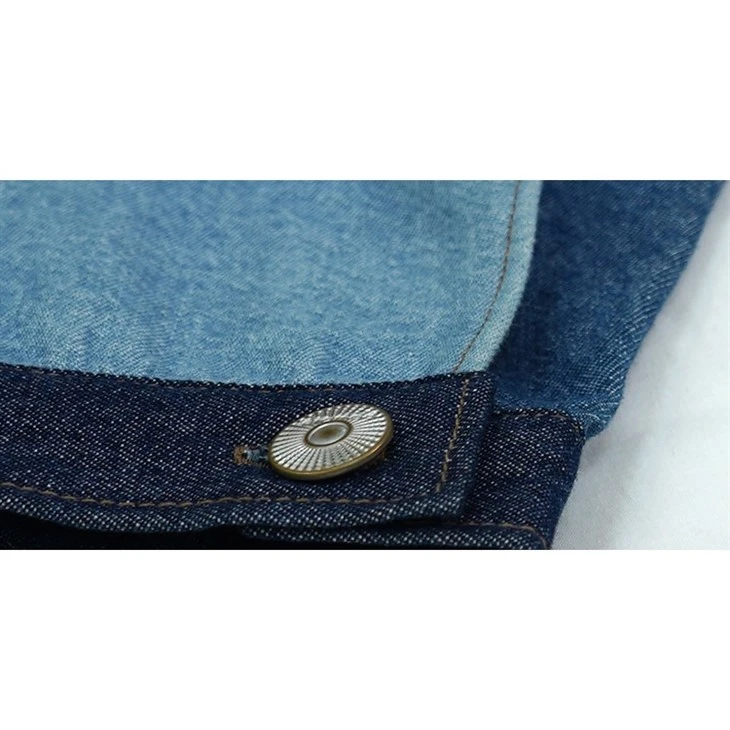
As a seasoned seamstress, I tend to take it for granted that people know the difference between a knit and woven fabric, but plenty of people don't. As evidenced by the questions I get at least once a week both in my clothing shop and my pattern shop like: "Can I use 100% cotton with this pattern?" or "Is this dress made of cotton or is it stretchy?"
The problem with both questions is that fabrics can be knit/stretch and be 100% cotton. But people have come to confuse 100% cotton with woven.
When you think of woven fabrics, think of fabric you'd use to make a quilt or curtains or upholstery. Woven fabric is generally crisp and not stretchy*. It can be as thin as chiffon or as thick as denim.
*Some woven fabrics, like stretch denim or stretch poplin, have spandex woven in to give it some stretch. A stretch poplin may have 15% stretch across the grain, which means a 10″ piece of fabric can stretch up to 11.5″.
When you think of knit fabrics, think of t-shirts and leggings. Knit fabric is usually stretchy and supple. It can be as thin as mesh or as thick as sweatshirt fleece.
Knit fabrics tend to offer a superior amount of stretch compared with wovens, perhaps 30-50% for a t-shirt or up to 100% for something like a nylon spandex. 50% stretch would mean a 10″ piece of fabric can stretch up to 15″. 100% would mean a 10″ piece of fabric could stretch up to 20″. That's quite a difference from the 11.5″ from the stretch poplin example.
This handy little drawing is a close-up of how woven fabric is constructed. Notice it's a sort of basket-weave pattern, with the threads running perpendicular to each other. Each thread is separate from the next, meaning that when it's cut, the edges fray.
This is a close up of a knit fabric. Knit fabric is called knit fabric because it is literally knit- very similar to the way you would knit a sweater with a ball of yarn and knitting needles. It's just usually done on a much smaller scale: tiny needles a very thin "yarn". Knit fabric is all one continuous piece of thread (or close to it), so a raw edge usually won't unravel the way it would on a woven fabric. And all of those interlocking loops are what allows for the natural stretchiness.
So what about all that 100% cotton stuff? Knits come in the same variety of fiber contents as woven: 100% cotton, 100% polyester, cotton/polyester blends, cotton/spandex blends, wool, nylon, rayon, etc.
I'm personally quite fond of the cotton/spandex or cotton/lycra blends. (Spandex and lycra are exactly the same thing, by the way. It's the difference between tissue and Kleenex: spandex is the generic name, Lycra is the trademarked name.)
Cotton/spandex jersey looks and feels almost the same as a 100% cotton, but I actually find it softer, and it offers a really awesome amount of stretch and elastic recovery: meaning it returns to its normal size after being stretched. If you've ever worked with a 100% cotton rib knit, you may have noticed that once it stretches, it doesn't always unstretch all the way. Next time try a cotton/spandex rib knit. You'll thank me.
So one of the questions that is often asked is "Can I use a woven fabric for a pattern that calls for knit" or vice versa. If the pattern calls for knits, there is very little chance you'd be able to substitute a woven, even a woven with some stretch. The reason is that most knit patterns won't have a closure like a zipper or buttons, relying on their stretch so that you can just pull them on. Think about the difference between a pair of leggings and a pair of non-stretch jeans: there's a reason the jeans have a fly. You probably wouldn't be able to get them on otherwise.
Aside from the closure issue, there's the issue of fit. Woven patterns often rely on darts and fitted seams to make a garment fit the curves of the body. Knit fabrics tend to forgo darts and extra seams, instead relying on their natural stretch to fit the body. At best, using a woven fabric with a pattern meant for knits will result in something that fits like a paper bag. At worst, you won't even be able to get it on.
Sometimes you may be able to use a knit fabric with a pattern that calls for wovens. It really depends on the pattern and the particular fabric. Some patterns might be relying on the structure of the woven fabric to look right, and a knit fabric would sag in all the wrong places. But if you're dying to use a pattern you've got for woven fabrics, but the fabric you're set on is a knit, give it a shot. You never know until you try it.
In my experience, most commercial sewing patterns are for woven fabrics. My patterns are a mix. The bustle and apron patterns work best with wovens. The rest require knit fabrics.
Unless you live in a big city like LA or New York with a sweet garment district, chances are your local fabric store carries mostly wovens.